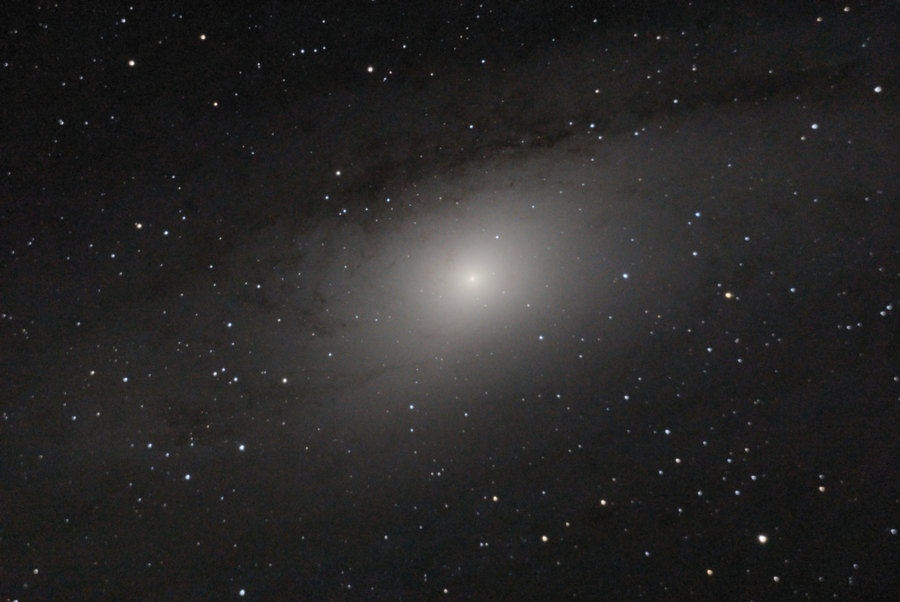
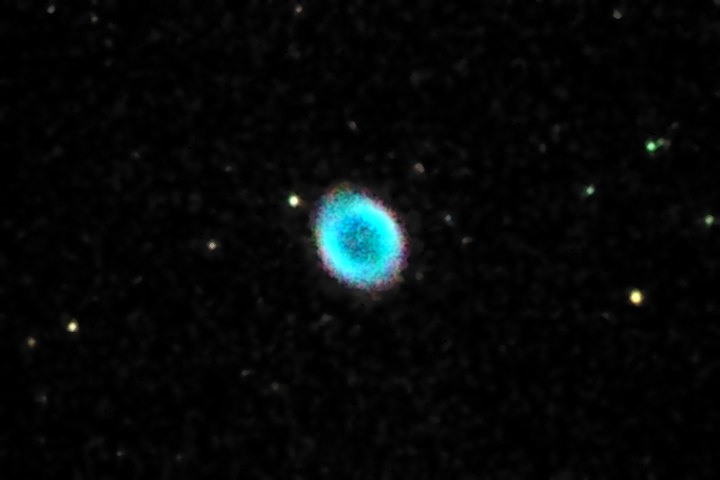
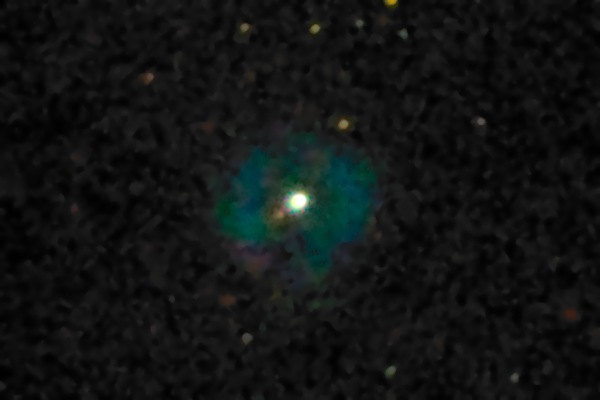
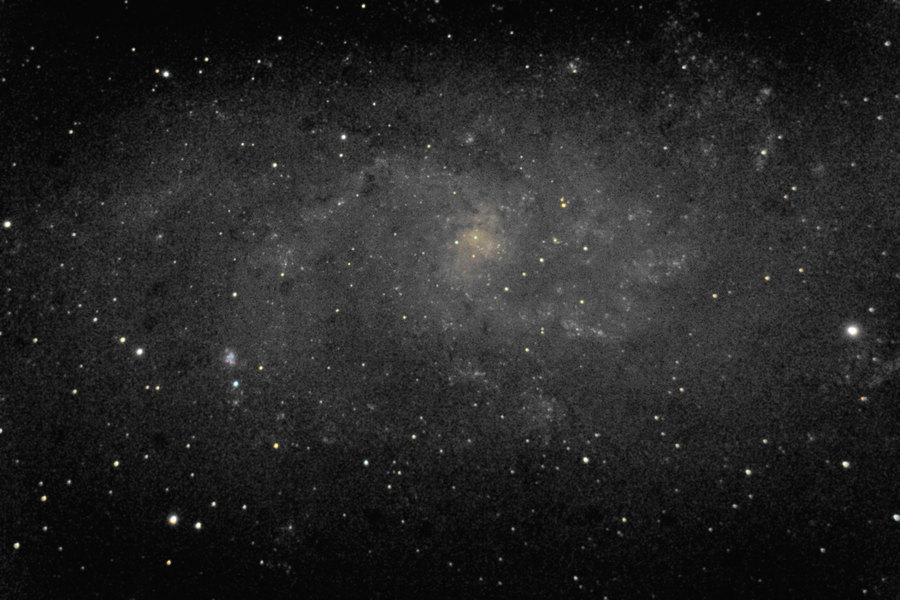
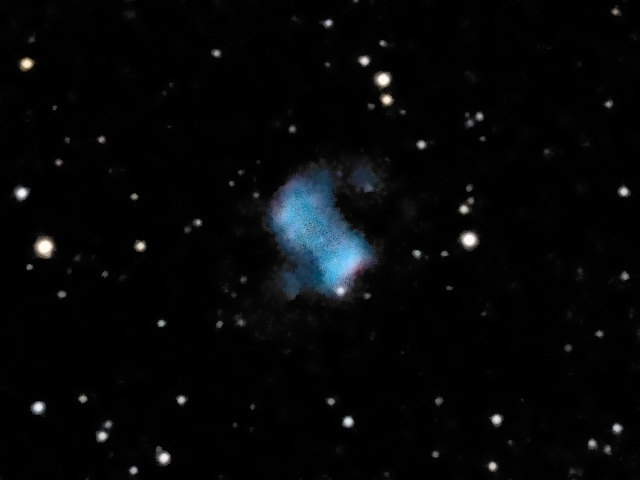
I set the tripod down in the driveway without leveling it, pushed one button, and the telescope worked out where it was pointing from four photos. After a break to show some kids things through the eyepiece, I put the camera back on and Claude had the telescope work through a list of targets on its own while I packed things up.
No darks this time, and no flats from dusk or dawn, so every picture was stacked with what the night's own frames could tell us. Two of the galaxies use a flat built from the open sky around the other targets. A smeared frame or a frame through cloud was dropped, and each picture's page says how many were kept.
Pick a picture to see what it is, how far away it is, and how it was made.
- Location
- San Francisco Bay Area. A driveway at home, with trees on most sides
- Sky
- Clear and moonless, with one patch of thin cloud that crossed the Ring Nebula for eight minutes. Steady air late in the night
- Telescope
- Celestron 8SE Schmidt-Cassegrain. 203 mm aperture, 2,082 mm focal length by plate solve, f/10.3
- Camera
- Sony a6000, stock, at prime focus. APS-C 23.5 x 15.6 mm, 6000 x 4000, 3.9 micron pixels, RAW
- Field
- 38.8 x 25.9 arcmin in one frame, 0.388 arcsec per pixel
- Mount
- Sky-Watcher EQ6-R, set down without leveling or polar alignment, 13.4 degrees off the pole. Aligned from four plate-solved photos and driven from that model
- Computer
- Raspberry Pi 3 running Observatory, in Elixir
- Frames
- 15 second exposures at ISO 3200, 24 to 33 taken per object and 14 to 30 kept
- Processing
- Stacked from the RAW frames with numpy, OpenCV and rawpy. Plate solving by astrometry.net. Nothing generated
© 2026 Brad Gessler. The pictures and the words are his own; all rights reserved.