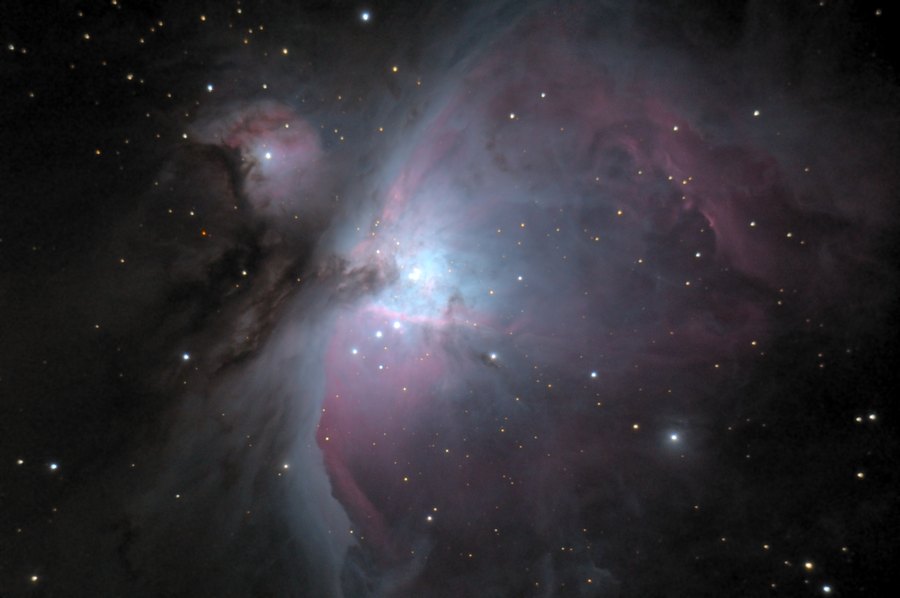
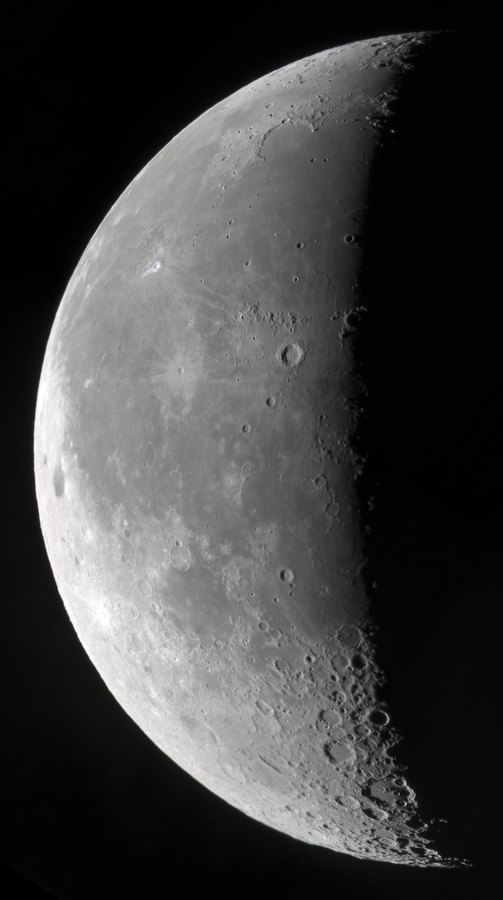
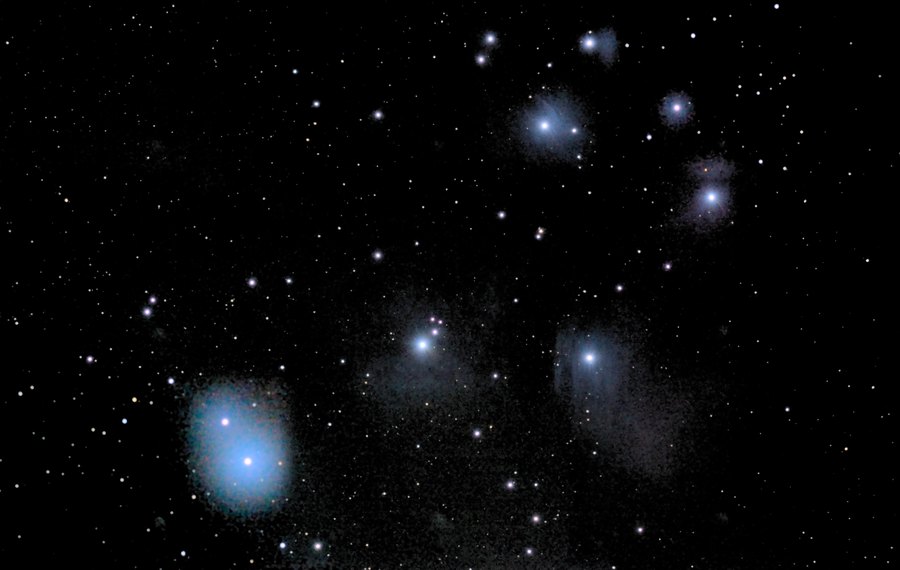
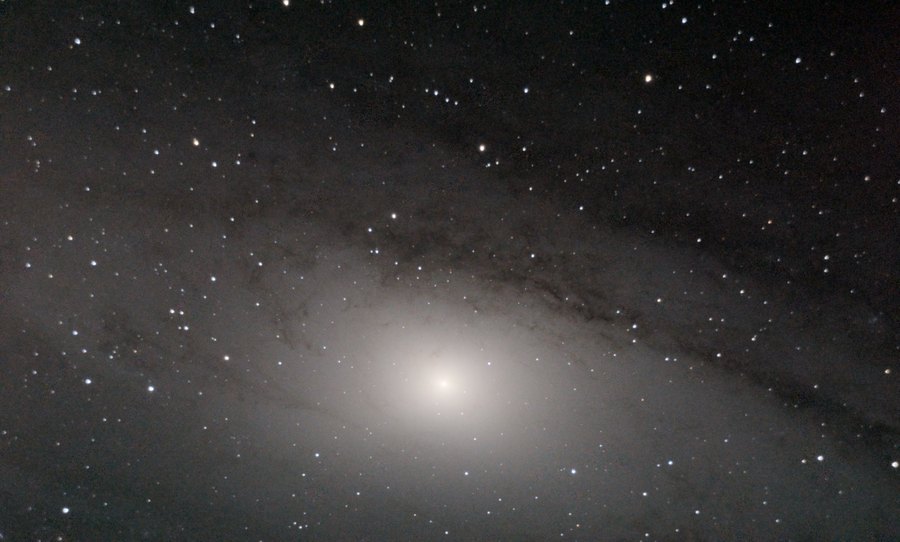
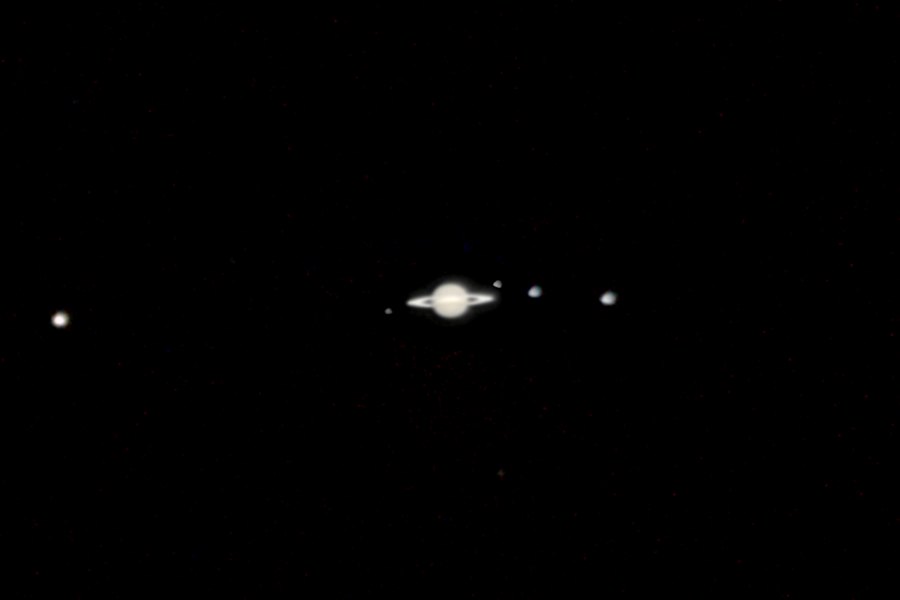
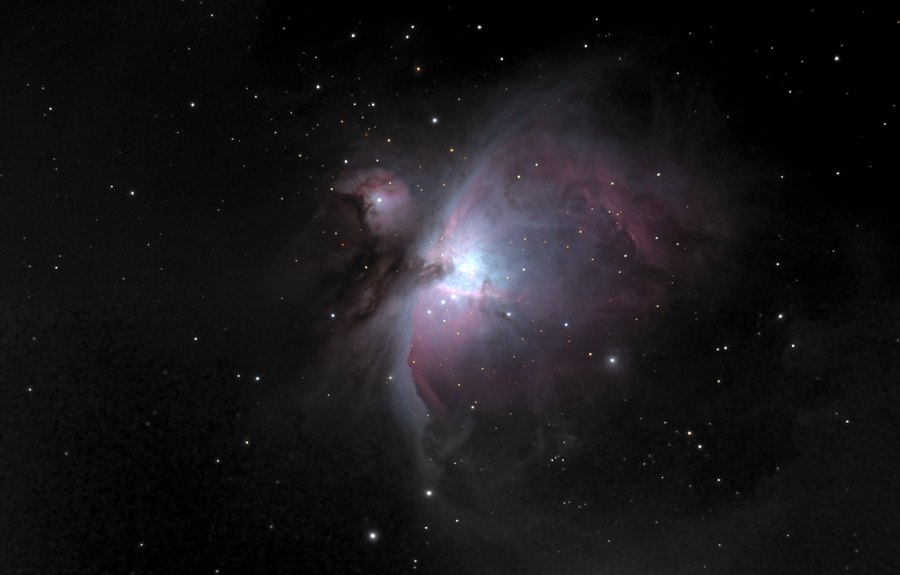
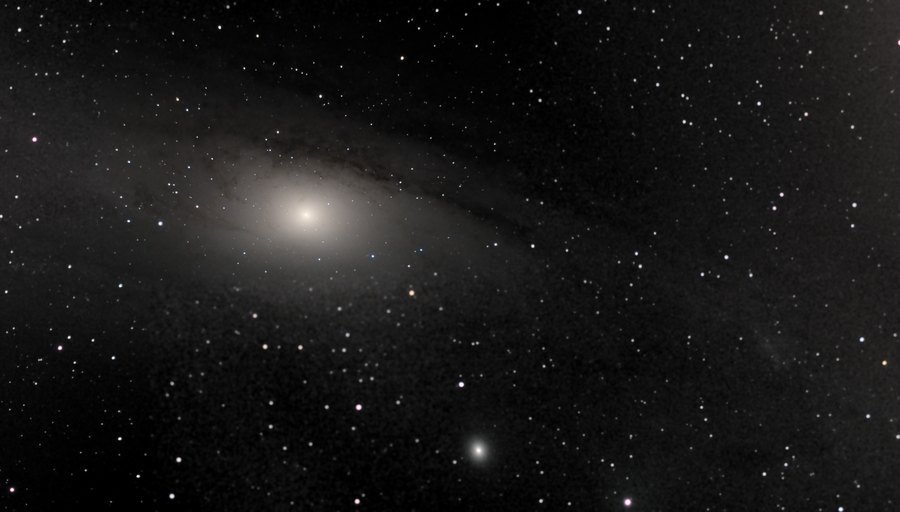
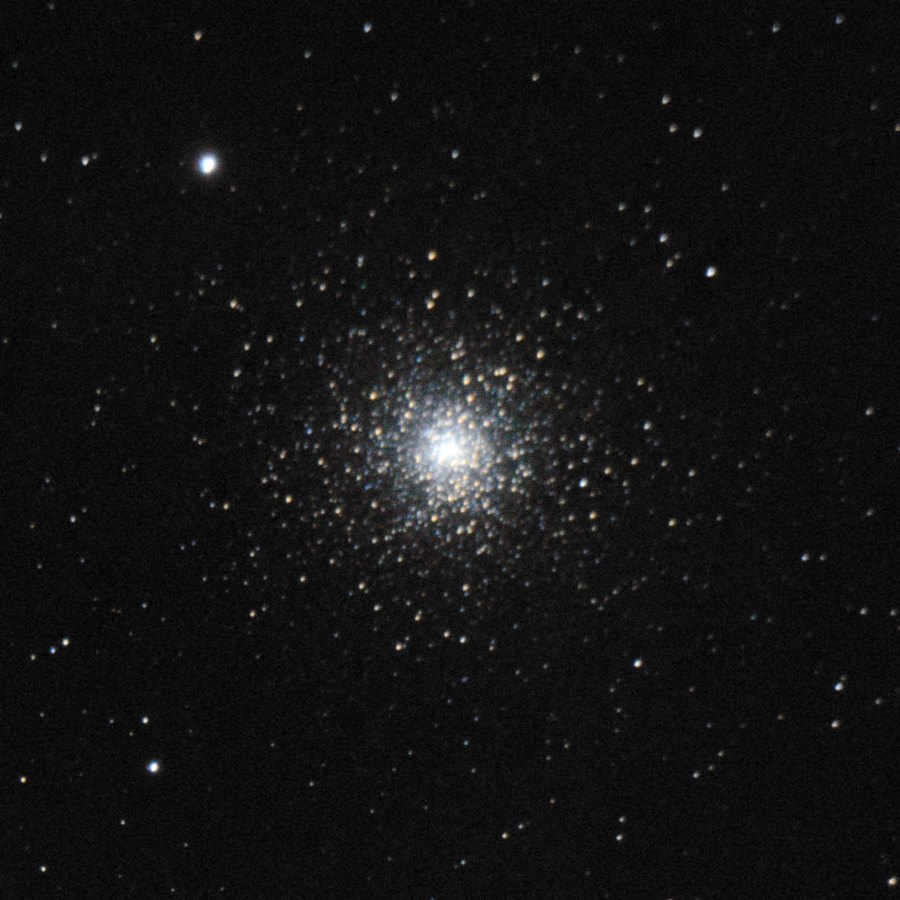
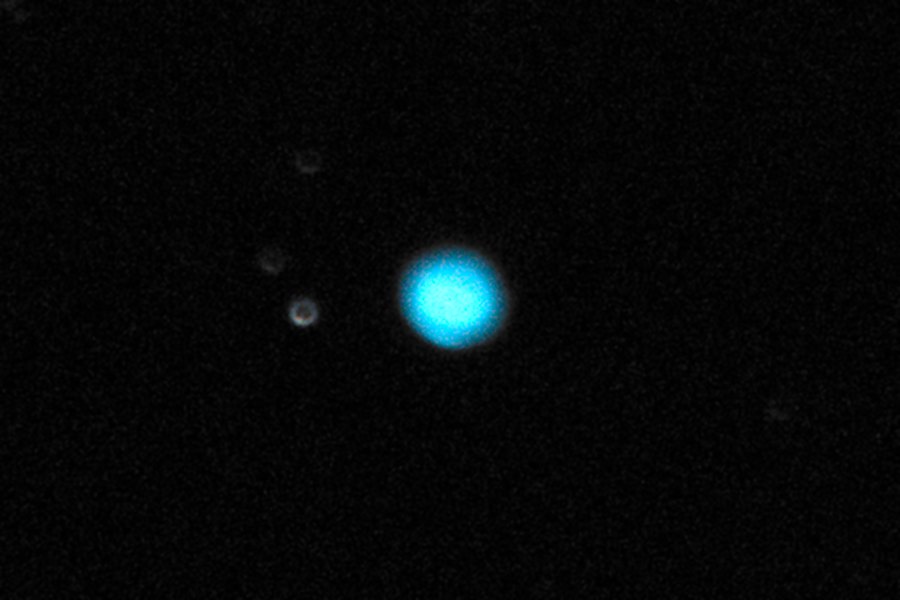
The telescope ran itself for most of this. Claude drove it through the software while I turned the focus knob, and then I went to bed. By dawn there were 990 frames on the card.
Thin cloud came through all night, so a lot of frames were thrown away. Every picture's page says how many were taken and how many were kept. Two targets never happened: the Ring Nebula and the Dumbbell were behind the tree.
Pick a picture to see what it is, how far away it is, and how it was made.
- Location
- San Francisco Bay Area. A yard at home, with a big tree to the west
- Sky
- Thin cloud drifting through all night, and a 41 percent Moon from the small hours. Warm, dry air
- Telescope
- Celestron 8SE Schmidt-Cassegrain with a dew shield. 203 mm aperture, 2,084 mm focal length by plate solve, f/10.3
- Camera
- Sony a6000, stock, at prime focus. APS-C 23.5 x 15.6 mm, 6000 x 4000, 3.9 micron pixels, RAW
- Field
- 38.8 x 25.9 arcmin in one frame, 0.388 arcsec per pixel
- Mount
- Sky-Watcher EQ6-R, unguided and not polar aligned. Set down 27 degrees off the pole, both axes driven from a pointing model fitted to plate solves
- Computer
- Raspberry Pi 3 running Observatory, in Elixir
- Frames
- 990 RAW frames between dusk and dawn
- Processing
- Stacked from the RAW frames with numpy, OpenCV and rawpy. Plate solving by astrometry.net. Nothing generated
© 2026 Brad Gessler. The pictures and the words are his own; all rights reserved.